

Discover how to transform your communication strategy to build pride and drive genuine participation in your urban communication initiatives.
Citizen participation in urban communication projects increases significantly when the communication strategy appeals to local patriotism and shared co-responsibility. Activating a sense of belonging through emotional narratives and collective symbols proves more effective for mobilising the community and building consensus than the mere dissemination of technical or bureaucratic data.
Only 2 out of every 10 people vote in municipal elections in many cities (Richey, 2023). Most cannot even name a single local councillor in their city council.
This disconnection between citizens and public administration is as real as it is concerning: the greater the emotional distance, the lower the desire to get involved and the lower the overall democratic quality of our communities.
'Local patriotism': feeling the city to care for it
Professor Sean Richey, in his article One cure for our sour politics: Local patriotismgets straight to the root of the matter by introducing the concept of "local patriotism": that feeling of affection, pride, or even frustration toward the place we live in. It might seem like a minor detail, but his study of 500 people makes it clear: loving your city is the single best predictor of citizen participation.
The research data provides a revealing breakdown:
- The 20% state that they love their city.
- The 50% value it positively.
- One in four (25%) (25%) feels no attachment at all.
The outcome?
The stronger that emotional bond, the more active and proactive citizens become: people attend meetings, volunteer, place greater trust in their local government, and discuss community issues within their close circles.
The key lies in feeling, not just knowing
Richey put his theory into practice through an experiment: he asked two groups to donate 1 dollar to improve an aspect of their city. Only one group was asked to reflect beforehand on their feelings toward the place. The difference was overwhelming: the group that thought about their city donated six times more (18% compared to 3%). Even reflecting on what you dislike or find frustrating mobilises people far more than feeling nothing at all.
The message for any communication strategy if we can get citizens to feel something—pride, affection, or a desire for improvement—a greater willingness to engage with the public space emerges automatically. public realm transformations,.

Can we build that emotional bond?
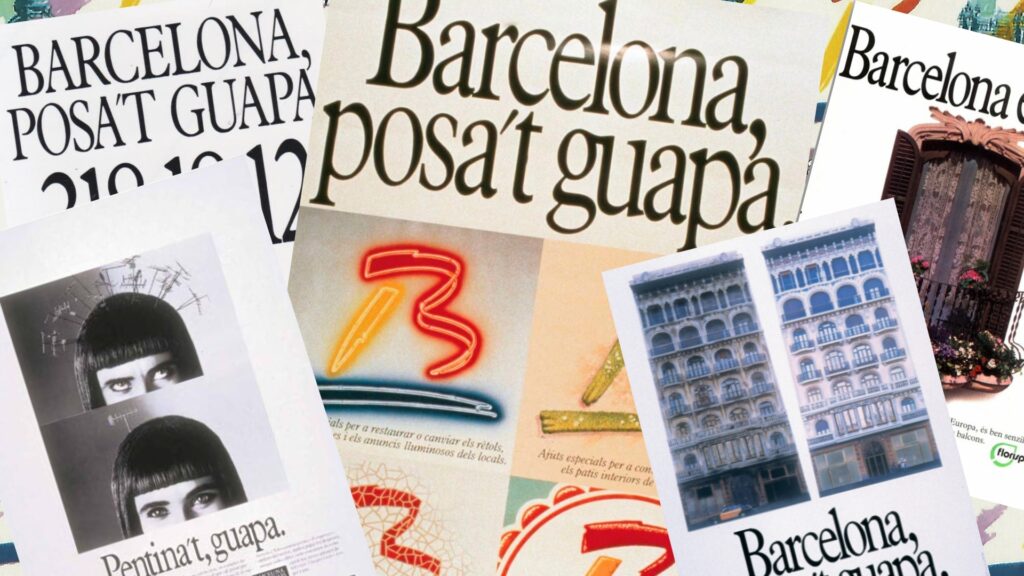
A sense of belonging is neither genetic nor accidental: it is cultivated. One needs only to look at legendary campaigns likeBarcelona posa’t guapa» Barcelona posa’t guapa (Barcelona, get handsome). This slogan, launched in 1986 ahead of the Olympic Games and accompanied by recognisable visual icons, called on the entire city to "get handsome". It covered building facades, engaged local organisations and shops, and celebrated local heritage.
The campaign did not merely fill the streets with stickers and banners; it accomplished something far more complex: engaging people and turning city care into a source of collective pride.
The keys to its success?
- It appealed directly to a sense of belonging.
- It championed shared co-responsibility between citizens and public institutions.
- It built a lasting narrative whose echo lives on today in the city's modern identity.
Campaigns like this transcend simple marketing: they demonstrate that major urban transformations always begin with a collective emotional spark.
Communicating to move (and transform)
When designing urban communication for strategic projects, one of the biggest mistakes is assuming that conveying cold or technical information is enough. Today we know that real transformation happens when citizens feel the city is truly theirs.
A communication strategy genuinely effective communication strategy must:
- Trigger collective pride and strengthen the sense of belonging.
- Share human stories and real symbols rather than just numbers or blueprints.
- Place emotion and daily lived experiences at the forefront, not bureaucracy.
Cities that evoke emotions foster more active neighbourhoods, a more trusted public administration, and projects that remain sustainable over time.
#Communication #UrbanDesign
References:
- Richey, Sean. «One cure for our sour politics: Local patriotism.» Governing, 2023. Read article
- “Barcelona posa’t guapa, el mejor eslogan municipal del siglo XX”, El Periódico, 2016. Read article